Dstny products are designed for integration — clean APIs, SIP endpoint connectivity, and white-label deployment that lets your practice deliver under your own brand or your client's. No proprietary lock-in and no constraints on how you package the solution.

Win more bids. Build less from scratch.
Your enterprise clients are asking for AI voice agents, Microsoft Teams integration, and conversation intelligence. Building those components from the ground up is an engineering investment that eats into project margins and extends delivery timelines. Dstny gives your practice production-ready AI voice and Teams integration components — carrier-grade, EU-compliant, and built to integrate — so you can deliver more for clients without building everything yourself.

5M+ users
80+ markets
Sovereign by design

Production-ready components
Clean APIs. EU-compliant infrastructure.
Dstny provides the components that SIs spend the most time and budget building from scratch: a portfolio of AI voice agents deployable as SIP endpoints, a full suite of Microsoft Teams calling integration options, and conversation intelligence that activates through the Dstny API. Everything is carrier-grade, EU-compliant, and available through a white-label commercial model that lets your practice deliver under your own brand.
The Dstny Services Fabric bridges the gap for practices that want to move fast — providing integration support, configuration tooling, and technical enablement so your team can focus on the client outcome, not the infrastructure beneath it.
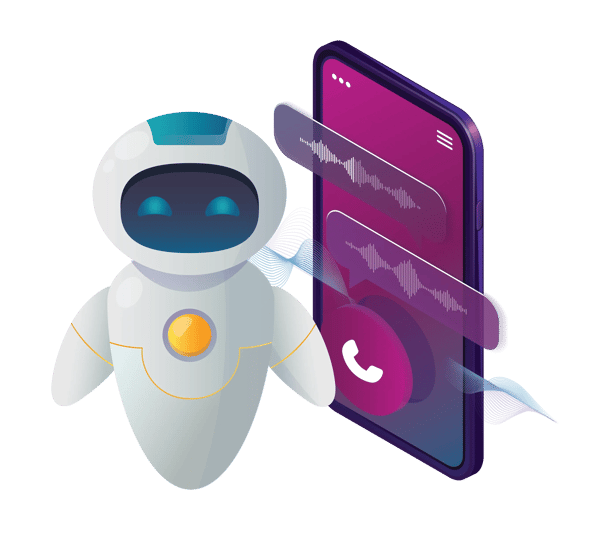
Dstny Digital Agents
Production-ready AI voice agents. Deployable as SIP endpoints.
Dstny Digital Agents is the primary entry point for SIs. The portfolio spans foundational answering and routing agents, enhanced agents for complex conversational flows, and an orchestration layer that generates derivative data from every interaction. All agents connect as SIP endpoints to any call control — no infrastructure change for the end client. For SIs building bespoke enterprise solutions, co-developed Customized Agents are available for practices with specific vertical or workflow requirements.
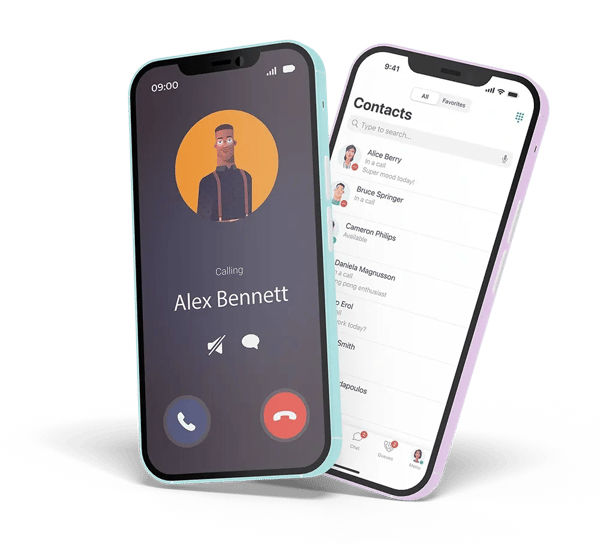
Dstny Call2Teams
Every route to Microsoft Teams voice. For SIs with enterprise Teams practices.
For SIs integrating Microsoft Teams into enterprise client environments, Call2Teams provides Direct Routing, Operator Connect, and Mobile as managed components — certified, maintained, and EU-compliant. The Call2Teams Configurator automates the setup process so your team can onboard Teams voice without deep voice certification on every project. Particularly relevant for SIs delivering Modern Work or UC transformation programmes.
Dstny Intelligence
Conversation intelligence and analytics for compliance-sensitive enterprise clients.
For SIs delivering into financial services, legal, healthcare, or any sector where call data is a compliance requirement, Dstny Intelligence provides call recording, CRM integration, real-time scoring, and full conversation transcription through clean APIs. Each component activates independently — so you include exactly what the client brief requires, without bundling capabilities they don't need.

More than a component supplier
The Partnership model
Dstny works with SI practices as a long-term technology partner — not just a component vendor on a single project. That means technical enablement, integration support through the Dstny Services Fabric, and a commercial model that makes sense for both project delivery and recurring managed service wraps.
We handle infrastructure, certification, upgrades, and operations — so your practice delivers outcomes, not overhead.


Have a project in mind? Let's talk about what Dstny can provide.
Talk to a Dstny specialist. We'll walk you through the AI voice and Teams integration components relevant to your current project pipeline, what the API and integration model looks like in practice, and how to structure the commercial relationship for your practice.