
Microsoft Teams Phone – The frictionless path for Service Providers to add lifetime value
Existing Dstny Call2Teams partners already know one simple truth. Microsoft Teams Phone is one of the best ways to get frictionless entry into the mos...


Microsoft Teams has become the default collaboration environment for business customers across most of the markets you serve. But Teams calling — real PSTN voice inside the Teams interface — still reaches only a fraction of those users. The majority are still on separate phone systems, paying separate bills, with a separate provider.
That is the gap service providers are in the best position to close. You already have the customer relationships, the billing infrastructure, and the network. Dstny gives you the integration layer.

Microsoft Teams has over 320 million monthly active users globally. Voice calling is enabled for a small share of them. For service providers, that represents one of the largest untapped recurring revenue opportunities in the market today.

Business customers are consolidating their communications onto fewer contracts and fewer vendors. Service providers who can deliver Teams calling alongside connectivity or mobile keep the account. Those who can’t are increasingly at risk of losing it.

Not every customer situation is the same. Some need Direct Routing from their existing PBX. Some want Operator Connect simplicity. Some need mobile-first delivery via SIM. Dstny gives you all three, fully white-label, on a single partner platform.

Dstny handles the carrier-grade infrastructure, the Microsoft certification, the maintenance, and the upgrades. Your team handles the customer relationship. You do not need to build a voice operations function to compete in this market.
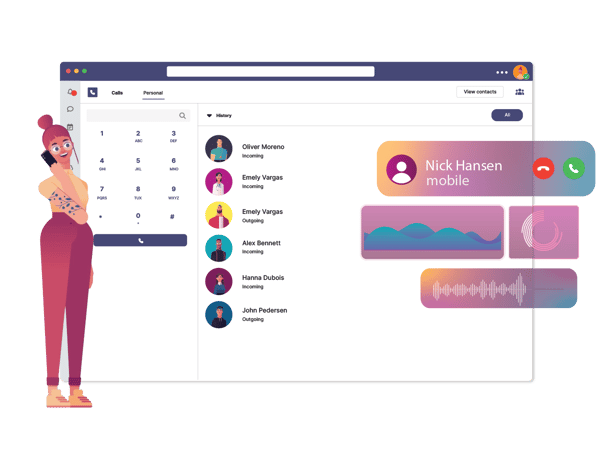
Every SP market and every customer situation is different. Dstny offers three routes to Microsoft Teams voice — each carrier-grade, fully white-label, and deployable without building voice infrastructure.
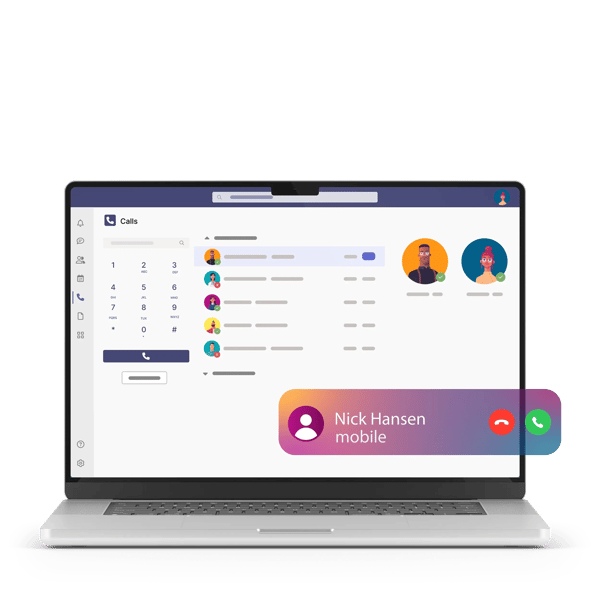
Most business customers already have a phone system. Call2Teams Direct Routing connects that existing PBX or SIP trunk infrastructure to Microsoft Teams via Direct Routing as a Service (DRaaS), giving users a fully native Teams calling experience without ripping out the infrastructure they are already on. Three pathways available: PBX, Trunks, and Hosted Voice. No Microsoft Calling Plans required.
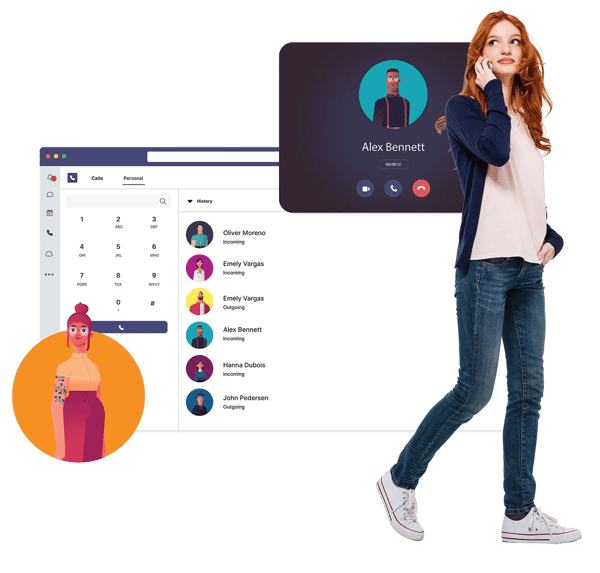
Operator Connect lets service providers sell and deliver Teams calling directly from within the Microsoft Teams admin interface — without Direct Routing complexity. Dstny's Operator Connect platform is Microsoft-accredited and built on carrier-class voice infrastructure. Service providers can provision at scale, with simplified management and a fully white-label proposition for their customers.
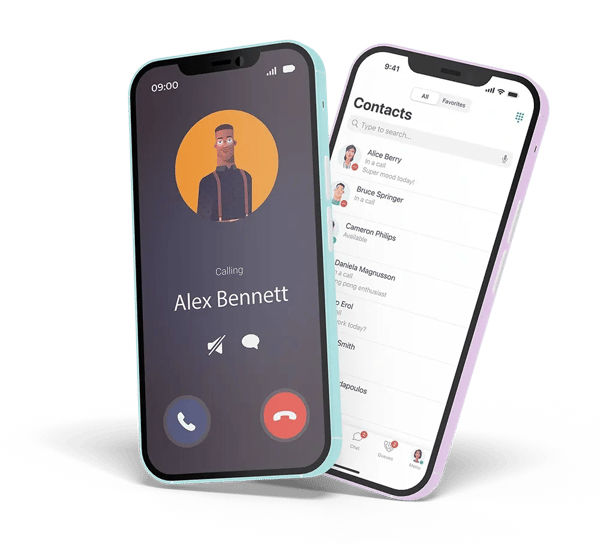
Your mobile customers run Teams, but their mobile number lives outside it. Call2Teams Mobile closes that gap: carrier-grade Teams calling delivered over your existing mobile infrastructure as an OTT layer, via your customers’ current SIM. No new devices. No new network. A differentiated Teams voice offer you can launch in weeks, on top of the mobile base you already have.




Monthly active Teams users globally
Markets where Dstny delivers Teams voice

Integration routes — Direct Routing, Operator Connect, Mobile




Tell us about your market and your customer base. We’ll show you which integration model fits, walk you through what the commercial model looks like in practice, and outline what a typical launch looks like for a partner in your position.