AI is no longer just a tool in the shadows. It’s stepping forward as an active collaborator in our working lives. But what happens when humans and AI truly work side by side? How do we redefine our roles, our organizations, and even our sense of meaning at work?
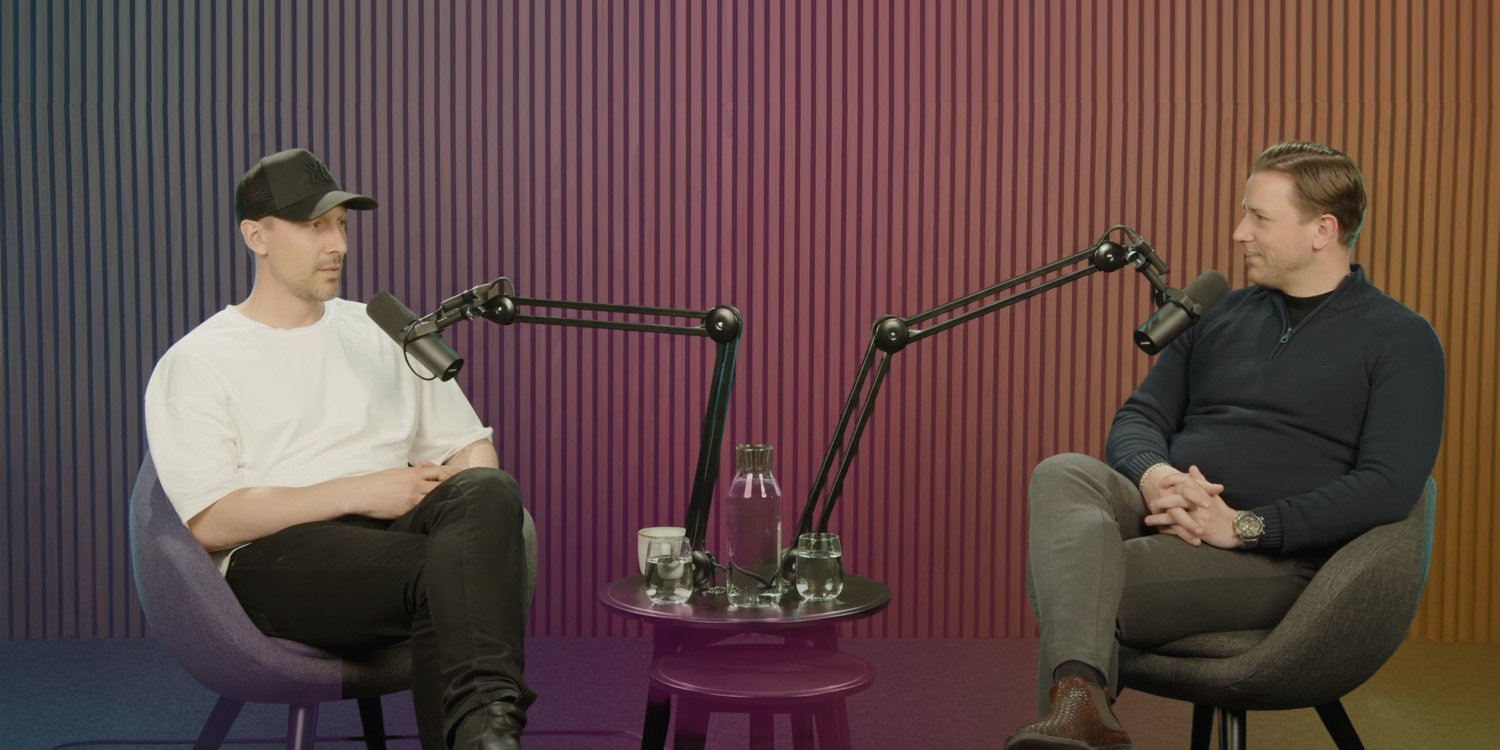
In this interview, Jonas Angleflod speaks with Gustav Molnar, a futurist and author, about the opportunities, risks, and leadership challenges in an age where AI becomes our colleague.
Jonas:
You describe yourself as a futurist. Can you paint a picture of a future where humans and AI work together?
Gustav: We’re in a major shift, not just about automating tasks, but about rethinking the role of humans at work. AI is moving from reactive tools like ChatGPT to proactive agents that can autonomously handle entire tasks or roles. This means AI won’t just support us, it will become a kind of colleague. Humans will shift from being performers to being conductors, guiding, orchestrating, and focusing on creativity and meaning.
Jonas:
That sounds both exciting and scary. Where does it lead?
Gustav: There are levels. First, AI augments human work. Then it begins innovating, inventing new solutions to global problems like sustainability or health. Eventually, we may face Artificial General Intelligence (AGI), capable of doing everything humans can. At that point, companies could be run by a single person supported by AI.
Between the extremes, dystopia or utopia, the likely scenario is a symbiosis. AI takes over repetitive work, while humans focus on creativity, problem-solving, and authentic relationships. But this transition will be difficult, and leadership will be crucial.
Jonas:
What fears do you encounter when you coach leaders and organizations?
Gustav: Employees often fear being replaced, especially when AI can handle half their daily tasks. Leaders, on the other hand, fear falling behind, not innovating fast enough, not keeping up with competitors.
There’s also resistance on three levels:
- Intellectual: People don’t understand AI’s potential.
- Emotional: People feel pride in old skills and resist change.
- Trust: People wonder if they can trust their leaders to manage this transition fairly.
Overcoming these fears requires transparency, inclusion, and clear communication of why AI matters.
Jonas:
What concrete steps should leaders take?
Gustav: First, don’t call it an “AI project.” It’s a human transformation powered by AI. Leaders need to inspire, coach, and involve employees so they feel motivated and safe. Practical steps include:
- Start small and boring: Use AI to automate meeting notes, repetitive reporting, or other time-draining tasks.
- Create learning loops: Give people space to experiment, learn, and share.
- Map opportunities: Look at efficiency (internal and external) and innovation (game-changing ideas).
- Communicate the why: Tie AI to long-term business goals, not just tech adoption.
And importantly: celebrate wins and normalize mistakes. Failure is only failure if you don’t learn.
Jonas:
And for individuals, how can employees become “world champions” at working with AI?
Gustav:
- Master prompting: Learn how to ask the right questions. Get curious, experiment, take online courses, or just practice.
- Build digital competence: It’s not just about tools. It’s about collaborating, communicating, and thriving in digital environments.
- Strengthen human skills: Curiosity, empathy, active listening, creativity. These are the things AI can’t truly replicate.
The future belongs to those who combine digital mastery with deeply human qualities.
Jonas:
Final thoughts; what will separate those who succeed from those who struggle?
Gustav: The winners will see AI not as a threat, but as an enabler. AI helps us achieve sustainable efficiency: being high-performing while also feeling good and having energy left for what matters most.
If we use AI wisely, it won’t strip away our humanity, it will give us more space to be human.
Want to watch the whole interview? Find it here: